
Photo: Carlos Monteiro
- Tijuca National Park
Tijuca National Park
In the heart of Rio de Janeiro, Tijuca National Park is a green jewel that pulsates amidst the bustling neighbourhoods of the metropolis. Spanning over 3,900 hectares, Brazil’s most visited park is considered one of the largest urban forests in the world and a true refuge for those seeking nature, history, and adventure. Created in 1961, it surprises with its beauty and moves visitors with its rich history: its area was once occupied by coffee plantations and was replanted in the 19th century, becoming today a living example of conservation within an urban setting.
The park is divided into four sectors – Tijuca Forest, Serra da Carioca, Pedra Bonita/Pedra da Gávea, and Pretos Forros/Covanca – offering a variety of trails, viewpoints, and waterfalls accessible from different points in the city. There you’ll find postcard-perfect sights like Corcovado and Christ the Redeemer – one of the seven wonders of the modern world – where the Paineiras Visitor Centre is worth a visit, as well as iconic viewpoints such as Vista Chinesa and Mirante Dona Marta. For those who enjoy hiking, there are trails to suit both beginners and experienced adventurers, such as Pico da Tijuca, with its 1,021 meters of height and staircase carved into the rock, providing one of the most impressive views of the city.
The thrill is also found in hang gliding or paragliding flights from Pedra Bonita, refreshing dips in waterfalls, and paths shaded by centuries-old fig trees. Colonial ruins, aqueducts, old farms, and chapels tell the city’s story amidst the forest. With rich biodiversity, including endemic species of the Atlantic Forest, the park is a perfect destination for birdwatchers, family picnics, trails leading to secret waterfalls, and climbs up rock faces with unique views. Discover the Marvelous City from a greener, calmer angle, just as fascinating as its beaches.
When to go
The park can be visited year-round. Between April and October, the weather is usually drier, with clear skies, ideal for hiking, trekking and enjoying the scenery. Summer (December to March) is rainier and hotter.
How to get there
The best way to get there is by car or ride-sharing service. Some entrances have free or paid parking. City buses also serve areas near the main entrances.
- Tijuca Forest Sector: main access via Estrada do Açude (Alto da Boa Vista)
- Serra da Carioca Sector (Christ the Redeemer and Vista Chinesa): access via Cosme Velho or Paineiras, via Estrada das Paineiras
- Pedra Bonita/Pedra da Gávea Sector: access via the São Conrado neighbourhood
- Pretos Forros/Covanca Sector: access via the Jacarepaguá region
Opening hours
Daily, from 8 AM to 5 PM. | Some trails or sectors may have specific hours. Check before you go.
Photo: Marcos Carmo
Interesting Facts
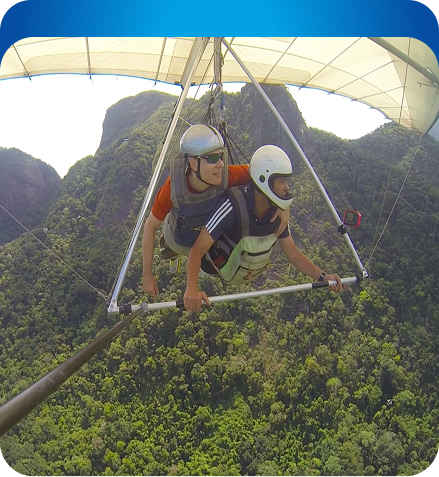
You can fly hang gliders and paragliders with a view of Christ the Redeemer
From the top of Pedra Bonita, adventurers jump with hang gliders or paragliders with a privileged view of Christ the Redeemer, the forest and the beaches of Rio. It is one of the few experiences in the world that combine tandem flight with such an incredible urban and tropical landscape.
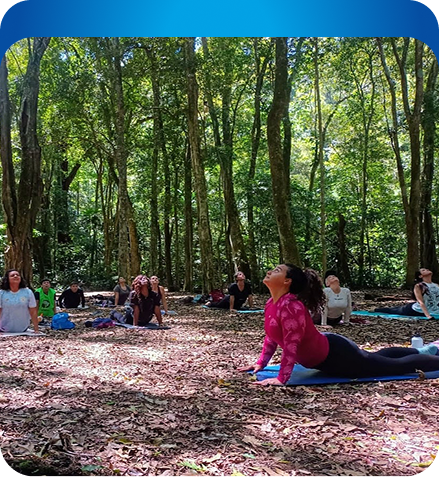
Photo: Luciana Nogueira – Teacher: Krishna Atma
Spiritual refuge in the metropolis
In addition to trails and sports, Tijuca National Park is sought after for meditation retreats, yoga and spiritual practices. Many visitors seek a deeper connection with nature and themselves. All these just minutes away from the urban hustle and bustle.
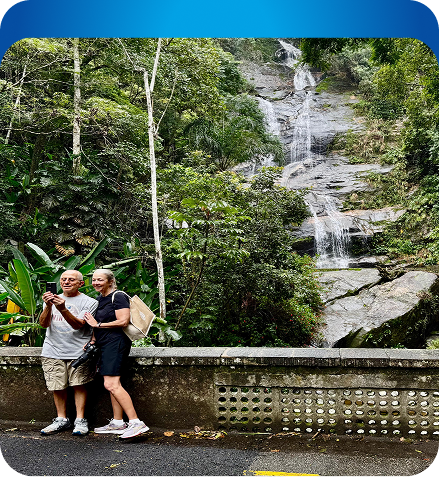
Photo: Marcus Carmo
Trails connecting historic neighbourhoods of Rio
It’s possible to cross the city through the Tijuca Forest. Some of the park’s trails connect neighbourhoods like Alto da Boa Vista, Jardim Botânico, Barra da Tijuca, and São Conrado, revealing an almost secret Rio de Janeiro, where the urban and the natural merge in a unique way.
Foto: Carlos Monteiro
Corcovado Mountain
At 704 m high, the mountain houses the Christ the Redeemer monument. The statue was inaugurated in 1931, is 38 meters tall and weighs approximately 1,100 tons.
Transcarioca Trail
The longest urban trail in Brazil is 180 Km long and integrates six Conservation Units. Inside Tijuca National Park, it begins at the access to the Gypsy Dam and ends at Lage Park.
Lage Park x Corcovado Trail
The trail starts at Lage Park and ends at Corcovado and can be hiked in up to 4 hours. Some sections are very steep and require considerable physical effort. Access closes at 3 PM.
Paineiras x Corcovado Trail
The trail is of moderate difficulty, is 1.15 Km long, and the estimated time for the hike is 45 minutes. Access closes at 3 PM.
Peaks Circuit
Extending for 19 Km, the circuit passes through Pico da Tijuca, Bico do Papagaio, Tijuca Mirim, Archer, Morro do Anhanguera, Excelsior, Pedra do Conde, Morro da Taquara, Castelos da Taquara, and Cocanha.
Students’ Trail
Signposts provide information and interesting facts about the park’s flora, and the trail passes attractions such as the Taunay Waterfall, ruins, the charming Mayrink Chapel, and the permanent exhibition “A Forest in the Metropolis”. The trail is suitable for children (accompanied by their guardians) from 4 years of age.
Historical Valley Circuit
This 7.5 Km trail allows visitors to explore the main ruins, fountains, and monuments from the time of the coffee farms, such as the Mayrink Chapel, the Farm Ruins, and the Wallace Fountain.
Cave Trail
An easy trail that passes through the park’s main caves, such as Paulo and Virgínia, Belmiro, Bernardo de Oliveira, and Morcegos.
Lage Park
A former sugar mill during colonial Brazil, the site preserves vestiges of this history. There you will find the famous Palacete (under restoration, with a planned reopening for visitation in November 2026, check here), with beautiful gardens, the Duck Lake, artificial caves, ruins, an aquarium, a playground, and a waterfall.
Gávea’s Rock
An 800-meter-high trail with a difficult level of difficulty and a 3-hour hike. The accompaniment of a certified guide and the use of safety equipment are required. Entry is only permitted until 2 PM.
Pedra Bonita
In addition to the spectacular view of Rio de Janeiro, the top of Pedra Bonita has one of the most famous and busiest paragliding ramps in the world. It is possible to take hang gliding and paragliding instruction flights on site. Entry allowed until 4 PM.
Vista Chinesa + Mesa do Imperador
The oriental-style pagoda and the stunning city view make Vista Chinesa an important tourist spot. Nearby, Mesa do Imperador is also a must-see for those seeking to contemplate the beauty of Rio.
Mirante Dona Marta
From the viewpoint you have one of the most beautiful views of the city, simultaneously appreciating Sugarloaf Mountain, Maracanã Stadium, Guanabara Bay and Corcovado.
Mirante da Cascatinha
A place for contemplating nature, from the viewpoint it is possible to admire the Cascatinha Taunay waterfall and the hills of Conde, Andaraí Maior and Tijuca.
Add Your Heading Text Here


Embratur and Visit Brasil are not responsible in cases of poor performance or not providing the experience conveyed. Service providers are solely responsible for the activities sold.
Soon, more natural parks itineraries will be launched.
©2025. Embratur & Visit Brasil | All rights reserved.